Looking to live a healthier life? Picking the right Dried Fruit can actually make a pretty big difference. I mean, nutrition expert Dr. Emily Johnson from the Fruit & Health Group always stresses, ‘Not all dried fruits are created equal.’ That really hits home, right? It’s a good reminder to be a tad picky when adding dried fruit to our snacks or meals.
Now, while dried fruit is super convenient and tasty, it’s not always as innocent as it seems. Sometimes, those little packs are loaded with hidden sugars and preservatives. Yeah, some brands sneak in extra sweeteners, so it’s definitely worth reading those labels carefully. For example, grabbing a handful of dried mango feels harmless, but it can pack more sugar than your averagE Candy bar — crazy, huh?
And here’s the thing: not all dried fruits are equally nutritious. Some lose vital vitamins and minerals during the drying process, so not every variety is a superfood. It’s a smart move to find out where your dried fruit comes from and choose wisely — your health will thank you. In the end, dried fruit can be a fantastic addition to your diet, but only if you pick the right ones. Just be mindful, and enjoy in moderation!

Understanding the Nutritional Value of Dried Fruits
Dried fruits are packed with nutrients. They retain most of the vitamins and minerals found in fresh fruits. For instance, they are often rich in fiber, which aids digestion. A small handful can provide a significant boost in energy. However, not all dried fruits are created equal. Some may contain added sugars or preservatives.
When choosing dried fruits, pay attention to the ingredients list. Organic options are often better, as they lack artificial additives. Unsweetened varieties are a healthier choice too. It is easy to overlook these details during shopping. This can lead to consuming more sugars than intended.
Consider the serving size as well. A small portion can be beneficial, but eating too much can have negative effects. Moderation is key. Comparing dried fruits can be challenging due to packaging claims. Therefore, do your research. Choose wisely, and remember that balance in your diet is essential.
How to Choose the Best Dried Fruit for Your Health?
Identifying Different Types of Dried Fruits Available in Markets
Dried fruits come in many shapes and sizes. They offer a tasty way to boost nutrition. Common varieties include raisins, apricots, and figs. Each type has unique flavors and health benefits. Raisins are sweet and chewy, packed with antioxidants. Dried apricots are often slightly tart and rich in vitamins. Figs provide fiber, which is great for digestion.
When selecting dried fruits, look for ones without added sugars. Some brands coat their fruits, making them less healthy. Organic options may have fewer preservatives. Dried Fruit Snacks can be an excellent energy booster. However, they can also be high in calories, so moderation is key.
Try mixing different varieties for a colorful snack. The combination of flavors can make your taste buds dance. You might find yourself enjoying unique pairings, like apricots with nuts. It's worth experimenting with recipes too. Dried fruits add flavor to salads and baked goods. But always consider their sugar content. They can be a delightful addition to your diet if chosen wisely.
Evaluating the Health Benefits of Popular Dried Fruits
When choosing dried fruits, consider their health benefits. For instance, apricots are high in vitamin A, which supports eye health. They also provide iron, contributing to better blood circulation. Raisins are another option. Rich in antioxidants, they help combat oxidative stress. They also contain fiber, aiding digestion.
Organic Dried Fruit often has fewer additives. This makes them a healthier choice overall. Figs are not just tasty; they are also packed with calcium. This promotes healthy bones. Dates are calorie-dense but provide a quick energy boost. Consuming them in moderation is essential.
Remember, not all dried fruits are created equal. Some may contain added sugars that negate their health benefits. It's crucial to read labels. Look for the simplest ingredients. Occasionally indulging in dried fruits is perfectly fine, but balance is key. Enjoy your favorites, but be mindful of portion sizes.
Recognizing Added Sugars and Preservatives in Dried Fruits
When selecting dried fruits, it’s essential to consider the presence of added sugars and preservatives. Many products on the market contain high levels of sugar. This can turn a healthy snack into a sugary treat. Always read labels carefully. Look for terms like "syrup" or "sugar" in the ingredient list. Sometimes, fruits are soaked in sweeteners before drying.
Tips: Choose fruits that list only the fruit as an ingredient. Organic dried fruits often have fewer additives. However, not all organic brands are equal. Often, they may still use preservatives to extend shelf life.
Another point to consider is the dryness of the fruit. Excess moisture can indicate preservatives used to maintain texture. Some dried fruits appear shiny, but this could indicate a coating of oil or sweetener. Avoid overly colorful dried fruits, as they may be artificially enhanced.
Tips: If you can, opt for bulk bins. This allows you to see the product clearly and often means fewer preservatives. Since dried fruits can still pack a high caloric punch, moderation is key. Balance them with nuts or yogurt for a nutritious snack.
Comparing Homemade vs. Store-Bought Dried Fruits
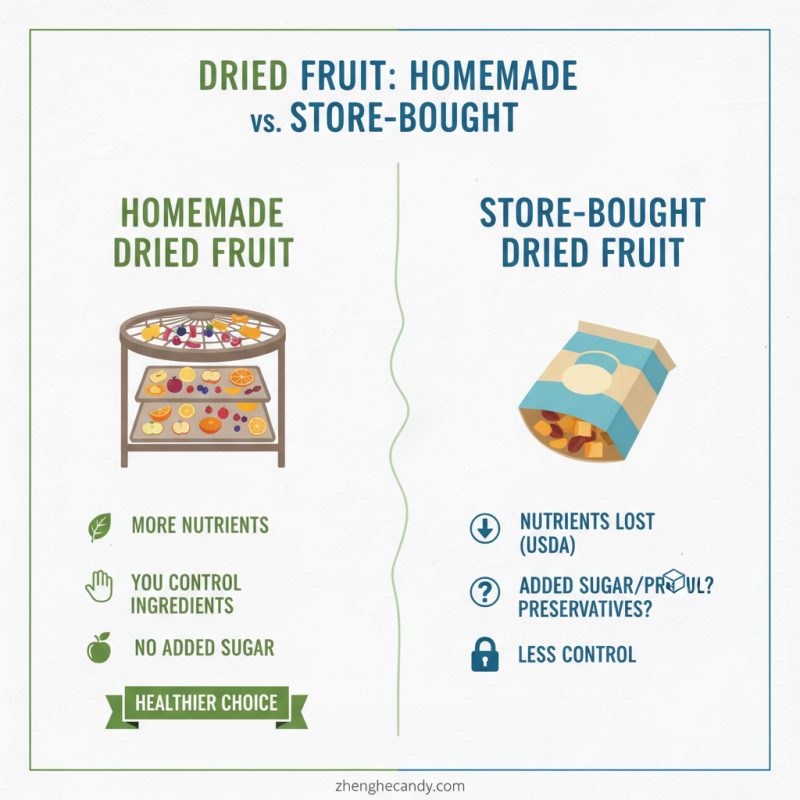
When choosing between homemade and store-bought dried fruits, several factors come into play. Homemade dried fruits often retain more nutrients. According to a report by the USDA, fresh fruits lose some vitamins during the drying process. However, making your own dried fruit means you control everything. You decide on the fruit, the drying method, and any added ingredients. This can lead to healthier choices, like opting for Dried Fruit No Sugar Added.
On the other hand, store-bought options may offer convenience. Many consumers prefer grabbing a package from the shelf. However, a study conducted by the Journal of Food Science found that many commercial dried fruits contain added sugars and preservatives. This can lead to a higher calorie count and diminish their health benefits. It’s essential to check labels carefully. Even “natural” claims might hide extra sugars.
There is also the concern of sourcing. Homemade fruit might be fresher, especially if local produce is used. Store-bought fruits may come from far-off places, losing freshness and nutrients. Some people find it ironic that dried fruit, often seen as healthy, can become less nutritious due to processing. Reflecting on these choices can lead to a more informed decision about dried fruit consumption.
Choosing Dried Fruits Based on Dietary Preferences and Restrictions
When choosing dried fruits, consider your dietary preferences and restrictions. Many people seek health benefits while still enjoying tasty snacks. Unsweetened Dried Fruit can be a great option for those looking to avoid added sugars. Data shows that many consumers are shifting towards healthier snacks.
For those on a low-sugar diet, unsweetened varieties provide essential nutrients without spike in blood sugar levels. Apricots and cranberries often come in unsweetened forms, making them suitable options. If you are allergic to certain fruits, always check labels carefully. Some brands may mix varieties, leading to unexpected allergens.
**Tips:** Look for seal certifications. Select fruits with no added preservatives. This ensures you’re eating natural, wholesome products. Explore organic options as they tend to minimize pesticide residues. Keep in mind not all dried fruits are created equal; one high in sugar may not suit your health goals.
Tips for Incorporating Dried Fruits into a Balanced Diet
Dried fruits make a nutritious addition to a balanced diet, but moderation is key. According to a report by the USDA, dried fruits can contain three to five times more calories than their fresh counterparts. A typical serving is about a quarter of a cup, but many people eat much more. This can lead to an unintentional spike in calorie intake.
Incorporating dried fruits into meals can improve nutrition. Consider adding sliced apricots or cranberries to oatmeal. They provide fiber and antioxidants. A study published in the Journal of Nutrition found that consuming dried fruits may increase the intake of essential nutrients like potassium and magnesium. However, it is crucial to be aware of added sugars in some products. Always check labels for ingredients.
Using dried fruits as snacks can be beneficial, but don’t overindulge. A handful can satisfy cravings, but larger portions might lead to digestive discomfort due to high fiber content. Balancing portions is vital. Pairing dried fruits with nuts can provide healthy fats and protein. This combo can enhance satiety, but portion control is vital here too.
FAQS
: This guide aims to provide insights and tips for effective practices.
Individuals and organizations seeking improvement can gain valuable knowledge.
Start by assessing your current methods. Then, implement small changes.
Yes, it’s crucial to tailor the advice to fit your unique context.
Overcomplicating the process can lead to confusion. Keep it simple.
Monitor key metrics and evaluate progress regularly. Adjust as necessary.
Yes, create a checklist based on key points to stay organized.
Reflect on the situation. Adjust your approach and re-evaluate.
Regular reviews, ideally quarterly, help maintain effectiveness.
Explore online articles and workshops for further learning.
Conclusion
Dried fruit is a nutritious and convenient snack option, but selecting the best variety for your health requires careful consideration. Understanding the nutritional value of different dried fruits is essential, as they come in various forms with differing health benefits. Popular choices offer unique advantages, while it's crucial to recognize the presence of added sugars and preservatives that can impact their healthiness.
When comparing homemade vs. store-bought dried fruits, individuals must evaluate which option aligns better with their dietary preferences and restrictions. Incorporating dried fruits into a balanced diet can be beneficial, provided you are mindful of portion sizes and the overall nutritional balance. With these tips, you can choose the best dried fruit to enhance your health and satisfaction.

 Breath Freshing Mints Series
 Preserved Fruits Series
 Vitamin C Fruit Juice Gummies Series
 Tin Box Fruit Hard Candies Series
 Plant Based Fruit Juice Gummies Series
 Mouth-Watering Sparkling Mints Series
 Sugar Free Mints
 Gummy
 Milk Stick
 3D Shaped Peelable Gummy
 3D Fruit Peelable Gummy